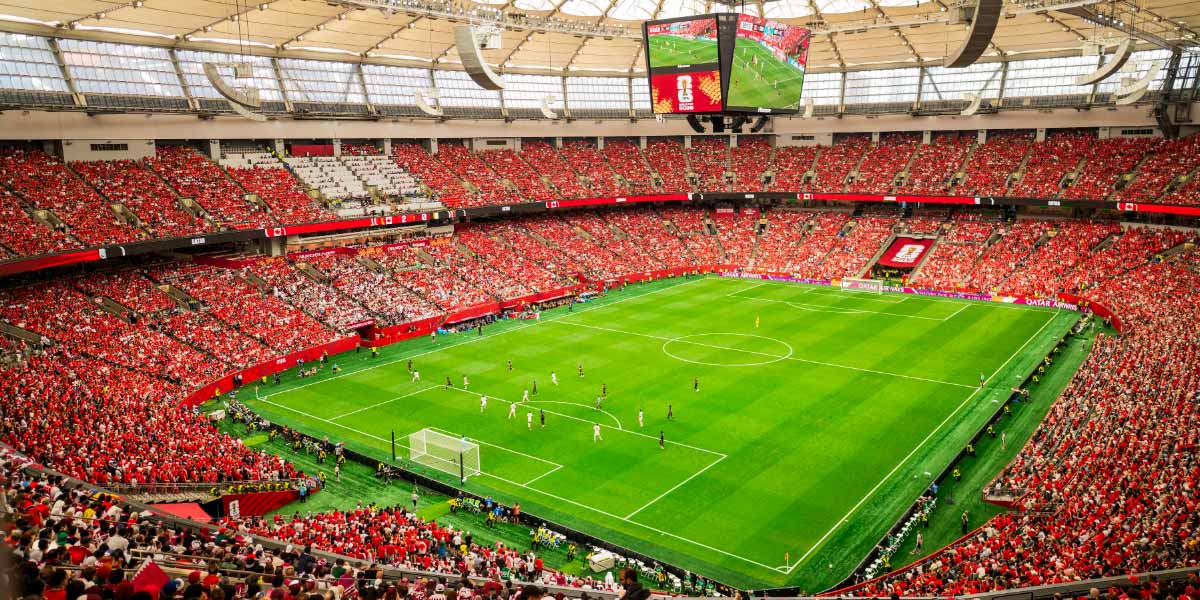
Stadium graphics for broadcast are no longer an afterthought—they’re a core engineering consideration from day one of sports venue planning.
Modern sports events reach global television audiences that exceed in-stadium attendance by orders of magnitude. Sponsors now measure branding value through screen impressions, not just foot traffic.
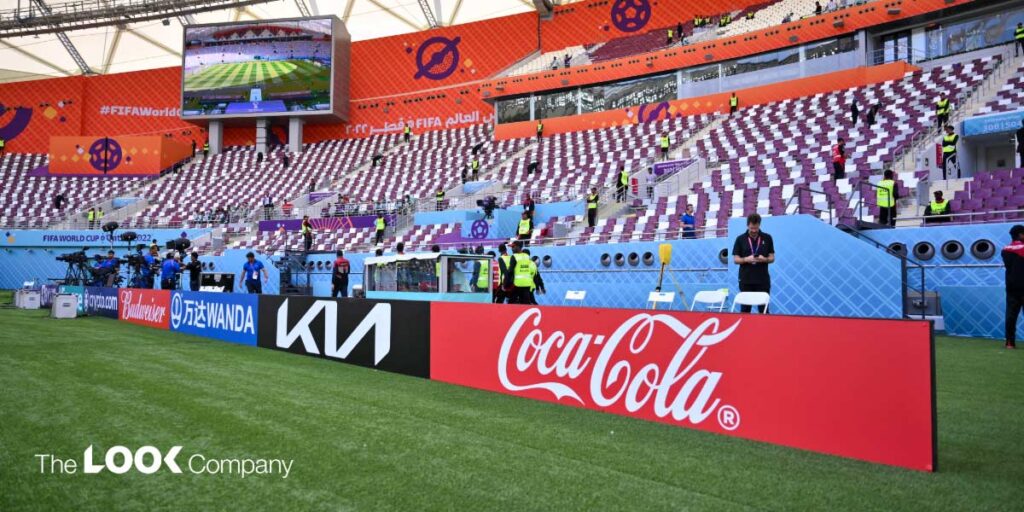
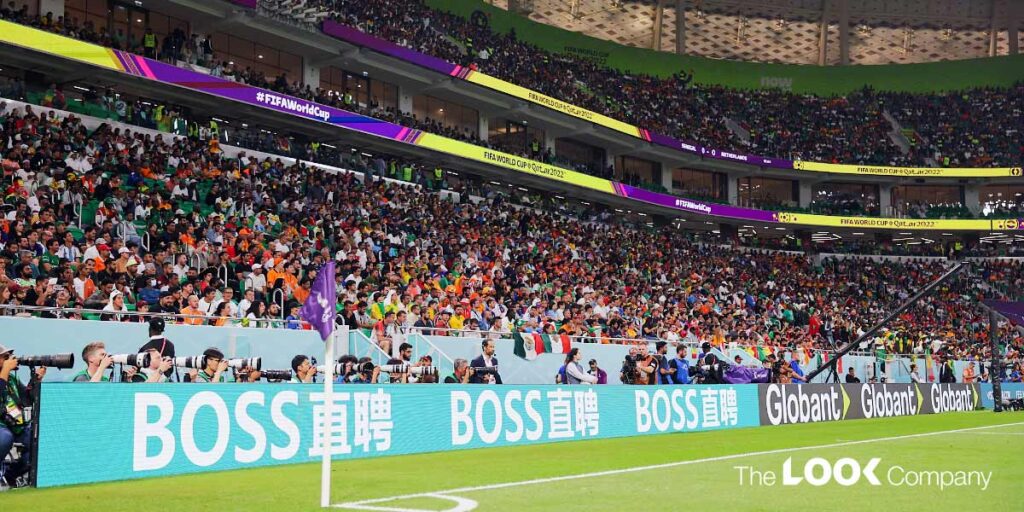
Broadcast cameras capture only specific zones of a venue, and if your signage isn’t positioned, fabricated and tested for those conditions, it simply doesn’t perform.
The shift is clear: stadium graphics today must be planned around lighting environments, camera angles and material surface performance—not just what looks good from the upper deck.
What Are Stadium Graphics for Broadcast?
Stadium graphics for broadcast are signage systems specifically engineered to perform under camera capture, broadcast lighting conditions and global television distribution.
They differ from traditional stadium signage in one fundamental way: the primary viewer isn’t in the building.
Beyond the In-Person Audience
Traditional signage is designed for sight distance, ambient light and human perception. Broadcast-driven stadium branding adds an entirely separate set of requirements.
A graphic must reproduce cleanly under high-intensity LED lighting, hold color fidelity through video compression and fall within the zones broadcast cameras actually capture.
An Engineering Problem, Not Just a Design One
Camera-facing sponsor signage must account for broadcast framing, logo legibility at compressed resolutions and glare behavior under match-day lighting. These are engineering problems, not just design decisions.
Why Are Stadium Graphics Now Engineered for Broadcast Instead of Just In-Person Viewing?
The economics of modern sport have driven this shift.
Television Audiences Dwarf In-Stadium Attendance
Global tournaments regularly reach hundreds of millions of television viewers. The 2022 FIFA World Cup Final alone drew an average live audience of 571 million viewers globally—a figure no stadium on earth could approach across an entire season.
Sponsors Are Buying Screen Time, Not Seats
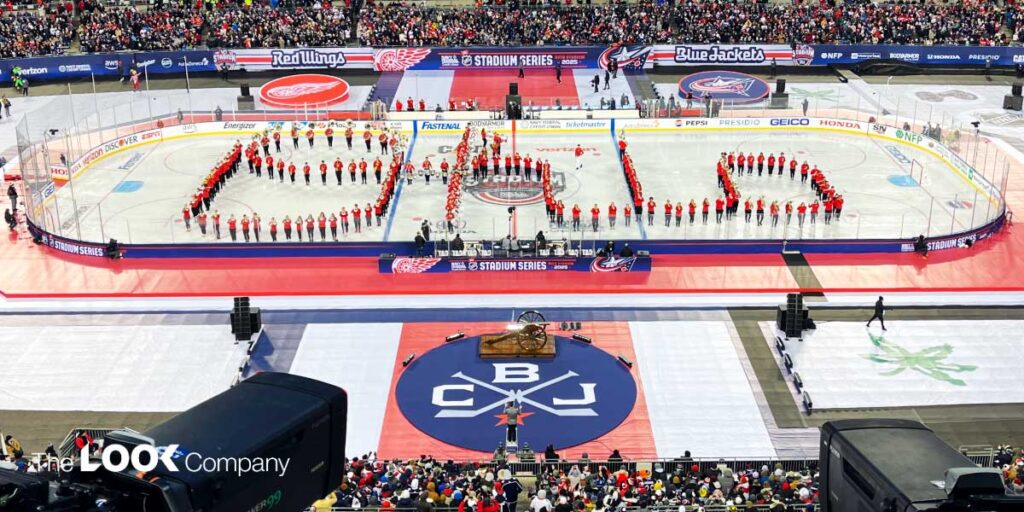
Sponsors have noticed. Placement negotiations increasingly hinge on broadcast sightline signage placement—where cameras are positioned, what zones they reliably frame and how long specific surfaces appear on screen per match.
Tournament broadcast branding at events like the FIFA World Cup or the Olympic Games is now coordinated directly with broadcast production teams to ensure signage falls within camera capture zones.
Venue planners who don’t factor this in during the design phase are solving a problem that’s expensive to fix after installation.
How Do Modern Stadium Lighting Systems Affect Broadcast Visibility?
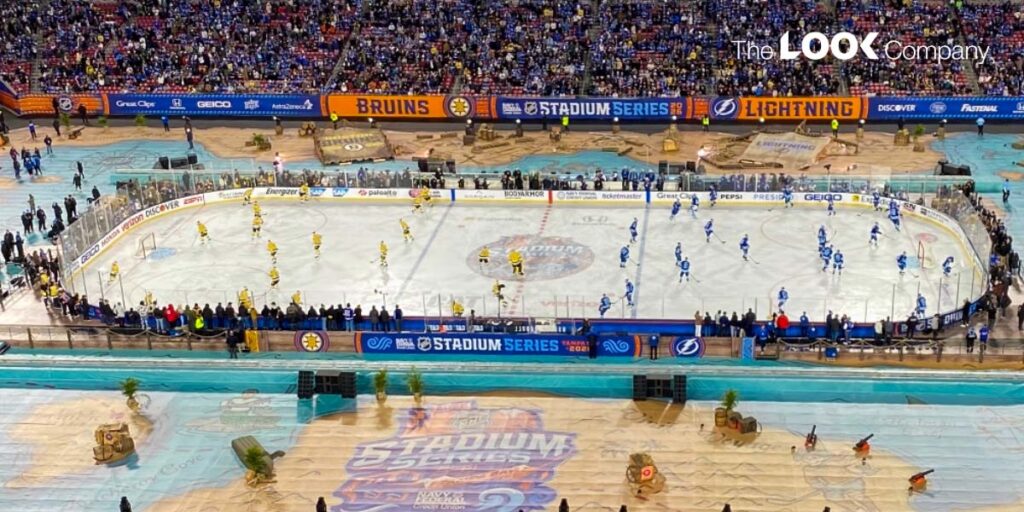
LED lighting stadium graphics present a fundamentally different challenge than legacy metal halide or fluorescent systems.
Higher Intensity, Higher Scrutiny
Modern LED arrays deliver significantly higher lux levels and a more precise color temperature. For broadcast cameras calibrated to those conditions, the result is sharper image capture.
But that same precision exposes surface inconsistencies, reflective hotspots and color inaccuracies that legacy lighting would have softened.
Why Testing Under Match Lighting Matters
High-intensity lighting amplifies the visual difference between a matte, diffuse surface and a reflective one. A graphic that reads cleanly under ambient light may produce glare, blown-out logos or uneven brightness under full match lighting.
This is why stadium graphic glare control must be evaluated under actual match lighting conditions before installation—not in a warehouse or under office fluorescents. What performs well in one lighting environment may fail in another.

Fabric vs. Vinyl: Which Materials Perform Better for Broadcast Stadium Graphics?
For fabric vs. vinyl stadium signage, the material choice has direct consequences for broadcast performance.
The Case for Fabric Tension Systems
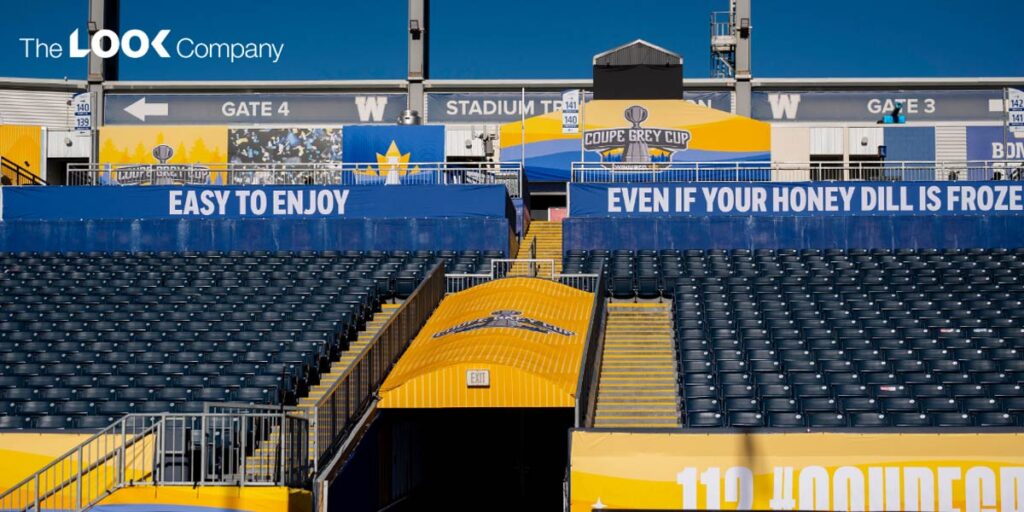
Fabric tension graphics—specifically silicone edge graphic (SEG) systems—maintain a smooth, wrinkle-free surface across the full face of the graphic. That smooth tension diffuses light rather than concentrating it, reducing the likelihood of glare hotspots under high-intensity LED arrays.
The result is consistent logo clarity and predictable color reproduction on camera.
The Limitations of Vinyl
Vinyl presents different challenges. Its surface characteristics tend toward higher reflectivity, which increases glare risk under strong stadium lighting.
Surface imperfections—seams, bubbling, slight warping—that are invisible at viewing distance become apparent to broadcast cameras at higher resolution. Vinyl can also shift color temperature under certain lighting conditions, affecting how sponsor logos reproduce on screen.
For stadium signage for television, fabric tension systems consistently outperform vinyl in broadcast conditions. The surface behavior is more predictable, and the installation method maintains graphic integrity over an extended event cycle.
How Do Glare and Surface Reflectivity Impact On-Screen Sponsor Visibility?
Stadium graphic glare control is one of the most technically consequential decisions in broadcast signage planning.
UV Reflectivity and Overexposure
UV reflectivity—the degree to which a surface reflects ultraviolet wavelengths—affects how a graphic appears under broadcast-calibrated camera sensors. High-reflectivity surfaces can register as overexposed zones, washing out sponsor logos exactly where brands are paying for visibility.
How Broadcast Compression Makes It Worse
Broadcast compression—the video encoding process used in live television distribution—compounds this effect. Compression algorithms can exaggerate brightness differences between adjacent areas of a frame, meaning a moderately reflective surface may appear far brighter on screen than it does to the naked eye.
The practical outcome: glare hotspots can partially or entirely obscure camera-facing sponsor signage during broadcast. For sponsors investing in stadium placement to generate screen impressions, that’s a direct loss of value.
Glare control isn’t a finishing detail—it’s a specification requirement.
Key Components of Broadcast-Ready Stadium Graphic Planning
Venue teams preparing for globally televised events should address the following planning components:
- Material testing under match lighting: Evaluate graphic surfaces under the stadium’s actual LED lighting system at full intensity before finalizing material specifications.
- Lighting condition evaluation: Map lighting zones across the venue and identify surfaces that fall within high-intensity or mixed-source lighting conditions.
- UV reflectivity and glare control: Specify materials with tested glare performance and review surface behavior under broadcast lighting scenarios.
- Fabric tension systems: Use SEG fabric graphics to maintain smooth, diffuse surfaces that minimize reflective hotspots and hold consistent color under camera capture.
- Broadcast camera sightline mapping: Coordinate with broadcast production teams to identify which venue zones are reliably framed by fixed and mobile camera positions.
- Pre-installation visibility testing: Test graphic placement and surface performance under match lighting before the event cycle begins—not after.
- 8-color printing expansion: Where color accuracy is critical for sponsor identity, expanding beyond standard CMYK to 8-color printing significantly broadens the gamut, improving the fidelity of brand colors under broadcast conditions and reducing the risk of color shift on camera.
The Look Company: Your Broadcast-Ready Stadium Branding Partner
Stadium graphics today are increasingly engineered for cameras, lighting systems and global television distribution—not solely for the fans in the building.
The planning considerations covered here—lighting environments, surface reflectivity, material selection, fabric tension systems, broadcast camera sightlines and 8-color printing—represent the technical foundation of effective broadcast-driven stadium branding.
The Look Company supports venue operators and tournament planners from the earliest stages of planning. That includes preparing for globally televised events, upgrading stadium infrastructure and designing camera-facing sponsor signage for maximum screen exposure.
With expertise in fabric tension graphic systems, large-format stadium branding, glare-controlled materials and broadcast sightline planning, The Look Company helps ensure that stadium graphics perform as well on camera as they do in person.
Ready to design stadium graphics built for broadcast? Connect with The Look Company today.
Frequently Asked Questions
Why Are Stadium Graphics Designed Differently for Television?
Stadium graphics for broadcast must perform under broadcast lighting, camera compression and global distribution—not just in-person sightlines. Television cameras capture surface reflectivity, color accuracy and glare in ways the naked eye doesn’t. Signage designed solely for spectators often fails to deliver legible, consistent sponsor visibility on-screen.
Does LED Stadium Lighting Affect Sponsor Signage Visibility?
Yes. Modern LED lighting stadium graphics are exposed to higher lux levels and more precise color temperatures than legacy lighting systems. This intensity amplifies surface reflectivity and can create glare hotspots that wash out sponsor logos on camera. Graphics should be evaluated under full match-intensity LED conditions before installation.
Is Fabric Better Than Vinyl for Broadcast Stadium Graphics?
In most broadcast environments, yes. Fabric vs. vinyl stadium signage comes down to surface behavior: fabric tension systems diffuse light and maintain a consistent, wrinkle-free surface, reducing glare and improving logo clarity on camera. Vinyl’s higher reflectivity and susceptibility to surface imperfections make it less predictable under broadcast lighting.
Why Is Camera-Facing Signage Important for Sponsors?
Camera-facing sponsor signage determines whether a brand appears on-screen during the broadcast. Sponsors increasingly negotiate placement based on broadcast sightline signage placement—the zones reliably captured by fixed and mobile cameras. Signage outside those zones only generates in-venue visibility, representing only a fraction of the total audience reach at major televised events.
Should Stadium Graphics Be Tested Before Installation?
Yes—always. Pre-installation testing under match lighting conditions is essential for identifying glare, color inaccuracy and surface performance issues before they appear on broadcast. Testing in a warehouse or low-intensity environments doesn’t replicate the conditions that expose problems. Evaluation under actual stadium LED lighting is the only reliable method.