

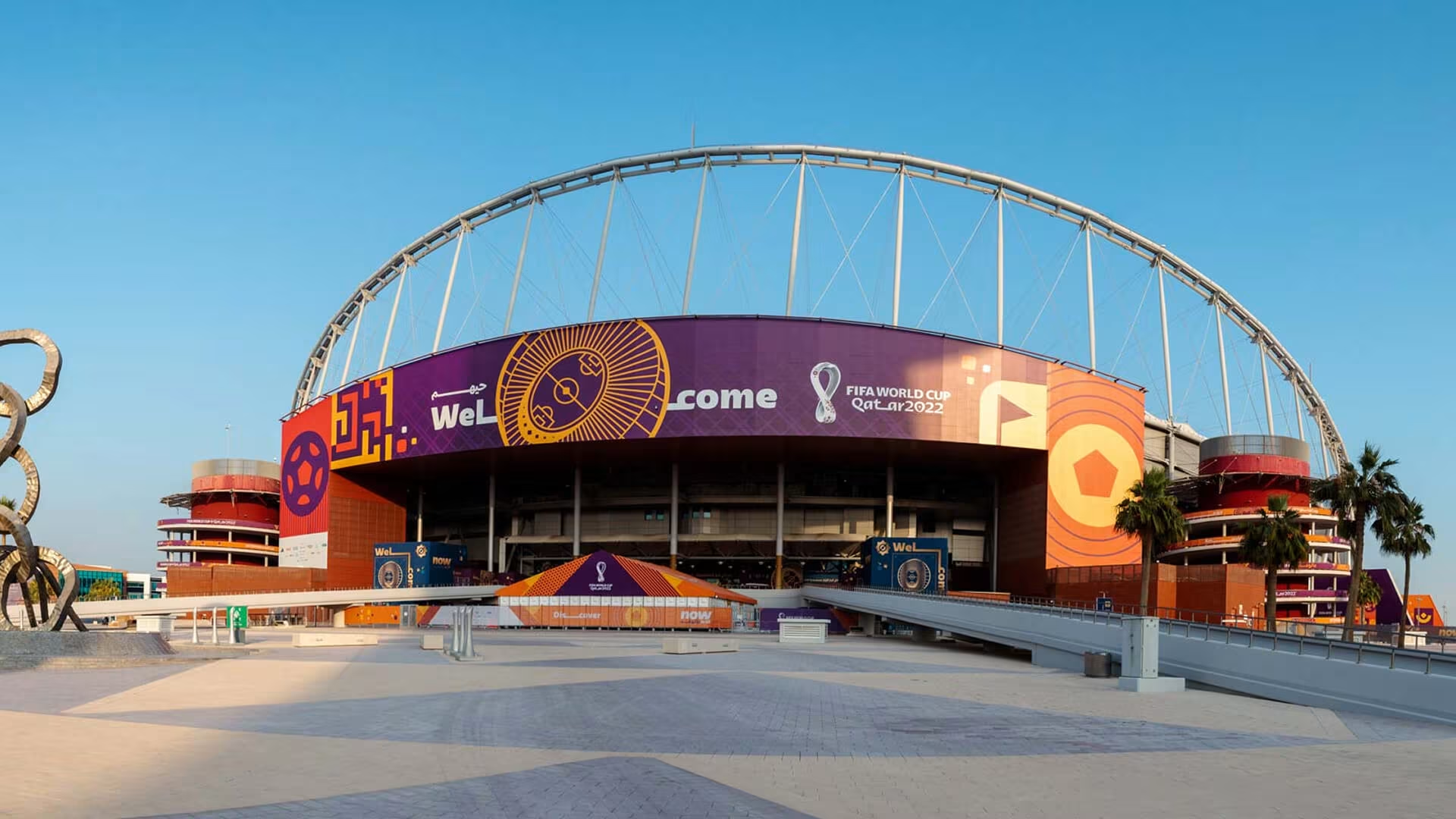
Sustainable Solutions for the FIFA World Cup Qatar 2022™
Our Part in Delivering a Sustainable FIFA World Cup

Sustainability
FIFA World Cup Qatar 2022™
In 2023, The Look Company received a gold from FESPA in the Roll-To-Roll Printed Textiles category with special recognition of the first-ever Sustainability Award for their work for the FIFA World Cup Qatar 2022™. Sustainability was a top priority for the FIFA World Cup Qatar 2022™ organization, host city and affiliates.
“In particular, the FIFA World Cup™ and the global attention it draws offers an unprecedented opportunity to drive positive change. We recognise that, by doing so, we will help to pass on not only a better world to future generations, but also stronger institutions, ultimately allowing us to deliver on our vision to promote and develop the game of football.”
— Fatma Samoura, FIFA Secretary General

To further their Sustainability Strategy, FIFA required all those who were tasked with delivering assets and staging the tournament to adhere to principal standards for the following key areas:

The Ask
Delivering a sustainable FIFA World Cup™ required The Look Company’s adherement to the following benchmark deliverables requested by FIFA, the Supreme Committee and the Qatar 2022 (Q22) Organizing Committee. Through these initiatives, the ultimate goal was to leave a legacy of environmentally conscious standards, practices and technologies in Qatar and the surrounding region.
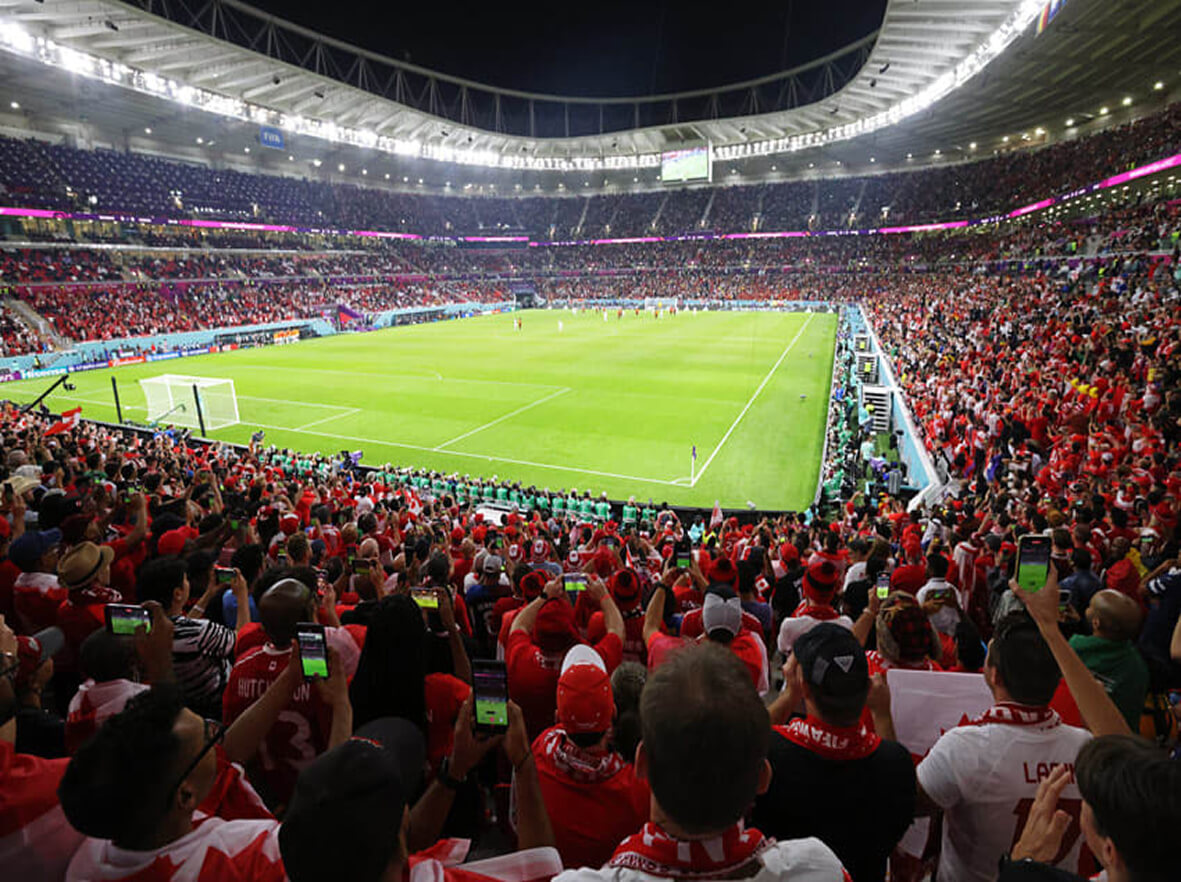
Sustainable Solutions
To address the goals and objectives of FIFA, the Supreme Committee, and the Q22 Organizing Committee to deliver the World Cup, The Look Company’s delivery program was designed from its inception with sustainability as a key guiding principle. Every decision from product design and function through to materials, manufacturing processes, and vendor selection, were made with the goal of minimizing environmental impact and creating sustainable solutions.
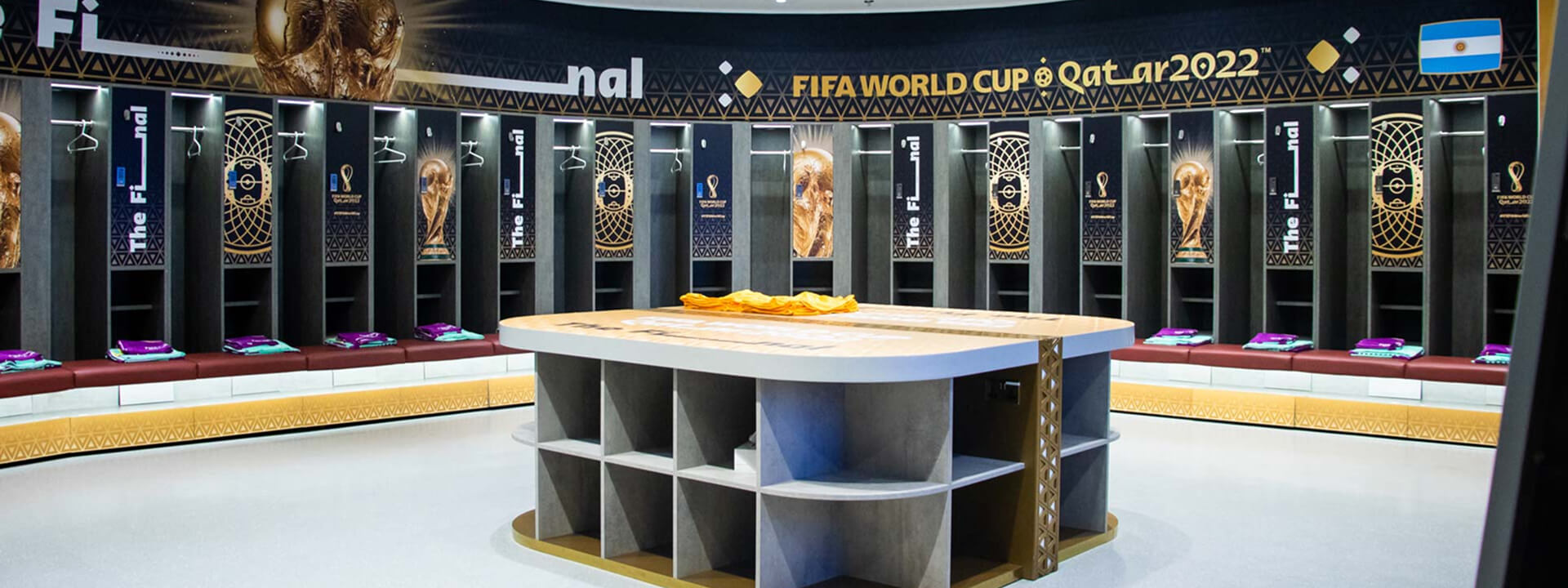
Regular sustainability audits were conducted by FIFA representatives and key members of the Supreme Committee and the Q22 organizing committee. In addition, the team at TLC provided regular reports and check-ins to document their progress on waste management, offsetting emissions, textile and frame reuse and recycling. Three areas in which The Look Company went above and beyond included the execution of Rotating FlagTrax (RFT) and Lite-Tracker Hardware, Solar Lighting for Wayfinding Structures and Textile Reuse and Recycling.
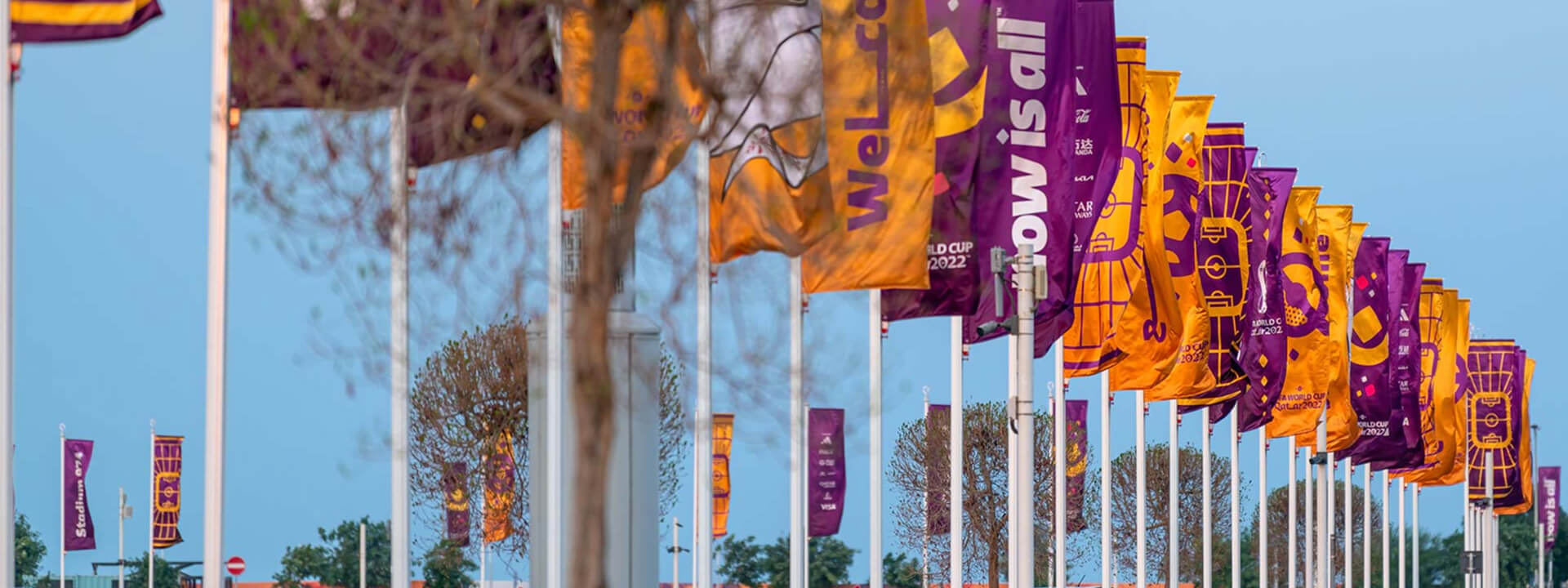
Rotating FlagTrax (RFT) and Lite-Tracker Hardware
With the goal of minimizing our environmental impact, the Rotating FlaxTrax (RFT) system was developed with sustainability as the main guiding principle. During the planning process for RFTs, including product design, sourcing materials, vendor selection, manufacturing, installation and maintenance, sustainable standards were considered at every stage. Installation and decommissioning of street banners using typical processes is extremely carbon-intensive. Traffic management, police escorts, bucket trucks are all required for traditional banner installs and maintenance. Idling vehicles exponentially increase pollution as traffic is held at a standstill or rerouted to accommodate speciality vehicles. Our system was safer for workers and faster, completed in 3 minutes or less.
All poles and hardware was sourced from a local aluminum provider, citing the highest recycled content possible. With a supplier closer to Qatar, raw material transportation is greatly reduced. Of the 300 tons of low-carbon aluminum produced for the World Cup, 90% has been added to reuse programs, with the remaining 10% being recycled for future extrusions. Other than the banner itself, all of the components in the system are reused, with no single use components. All parts of the system, including the pole itself, are recyclable at end-of-life.
Solar Lighting for Wayfinding Structures
During the FIFA World Cup Qatar 2022™, over 1,300 branded signage and temporary wayfinding structures were installed throughout Doha and competition venues to help guide fans to their destinations quickly and efficiently.
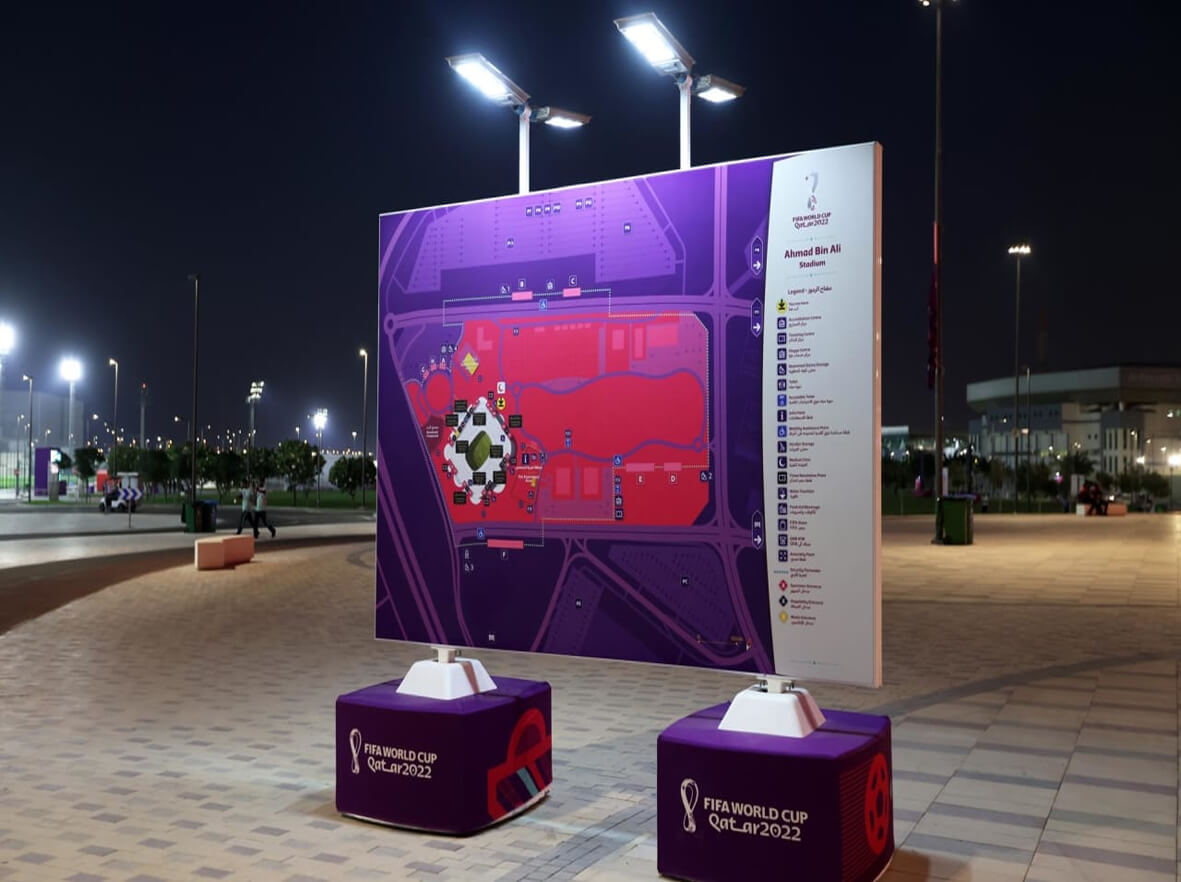
In order for the wayfinding structures and signage to be visible at night, it was necessary to accessorize them with lighting. Looking into various ways to light up the freestanding structures, The Look Company sought a sustainable source of energy to power the lights around the signage. After investigating different viable solutions, The Look Company concluded that their best option was to power the LED lighting systems with solar energy. In total, 608 full sized solar panels were installed to provide power for the high efficiency LED lighting for our large wayfinding structures, while 3200 all-in-one solar lighting fixtures were installed for the smaller signage.
This program provided 100% of the energy required by the signage, more than 20,416 Kwh for the FIFA World Cup Qatar 2022™ alone. All of these components are part of our reuse program. We are currently working on regulatory approval to use the 608 full sized panels at our manufacturing facilities in North America and France to offset our energy consumption.
Textile Reuse and Recycling
All of the fence fabric produced by The Look Company for the FIFA World Cup Qatar 2022™ was made from 100% recycled polyester yarns. Of the 20 tons of material that was used, 100% of it has been recycled and will be used as raw material to produce new goods. In addition, our recycling program has already processed more than 65,000 kgs of textiles and rigid sign material from the World Cup event, and is projected to surpass 100,000 kgs by the time it is complete.
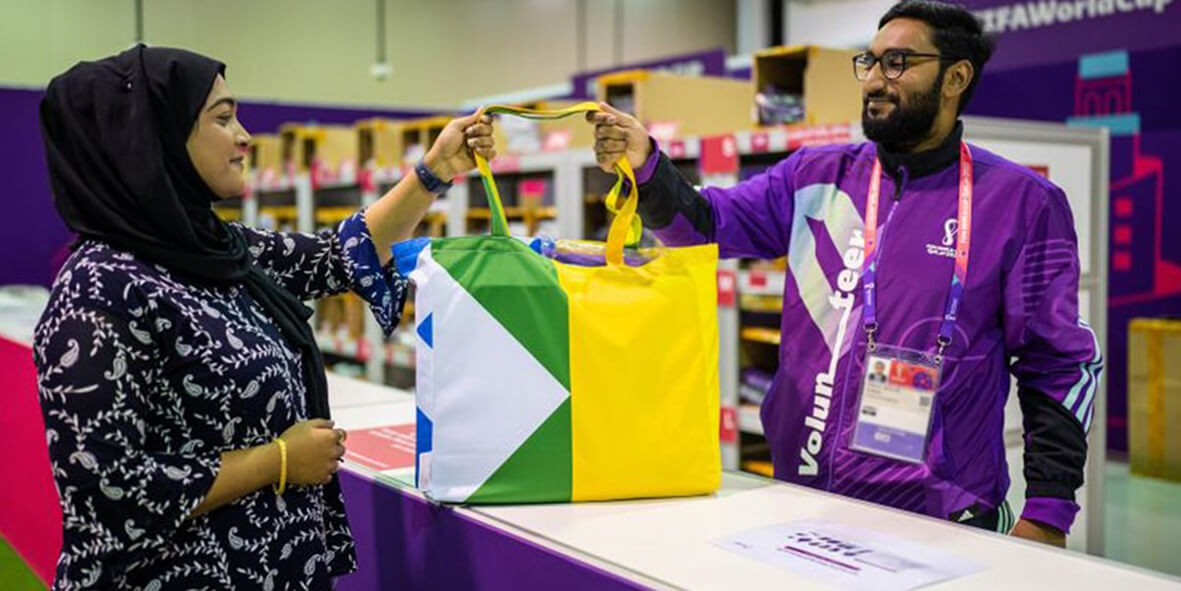
The MOGwear recycling program repurposes branded materials from sporting events into bags, clothing, and other items. After the FIFA World Cup Qatar 2022, 10,000 MOG (Memories of the Games) bags were made from recycled banners and flags for The FIFA Women’s World Cup 2023 in Australia and New Zealand. Pictured Right: 28,000 MOG Bags were made from recycled material from the FIFA Arab Cup and handed out at the FIFA World Cup Qatar 2022.
The Results
From the success of the efforts put forward by FIFA and affiliates, future FIFA World Cup Tournaments will continue to use this sustainability program as the basis for ensuring operational efficiency and guiding ecological imperatives to avoid, reduce, reuse and recycle. “Sustainability has been at the heart of the FIFA World Cup 2022™ from the start, premised on the idea that the preparation and delivery of a mega-sporting event can have a significant long term impact on leaving a greener, more equitable place for generations to come.” – FIFA World Cup 2022™ Sustainability Progress Report.
The Value Add
At The Look Company, we’re using the experience from delivering The World Cup to expand sustainability practices throughout all of our facilities globally. We are committed to making a positive impact for the environment, our customers and the world.
Contact Us
Let’s Get Started
You have the vision, we can help you get there