Operationalized visual merchandising is how high-performing retail brands scale store graphics without losing consistency, speed or control.
For most large retailers, store graphics have historically been treated as creative projects—commissioned, produced and installed on a campaign-by-campaign basis with little standardization between locations.
That approach doesn’t scale.
When you’re managing dozens, hundreds or thousands of store locations, visual merchandising can’t live in the creative department alone. It needs to be built into your operations—with systems, processes and infrastructure that make execution repeatable and measurable.
This article breaks down what operationalized visual merchandising looks like in practice, why retailers are moving in this direction and what the right infrastructure makes possible.
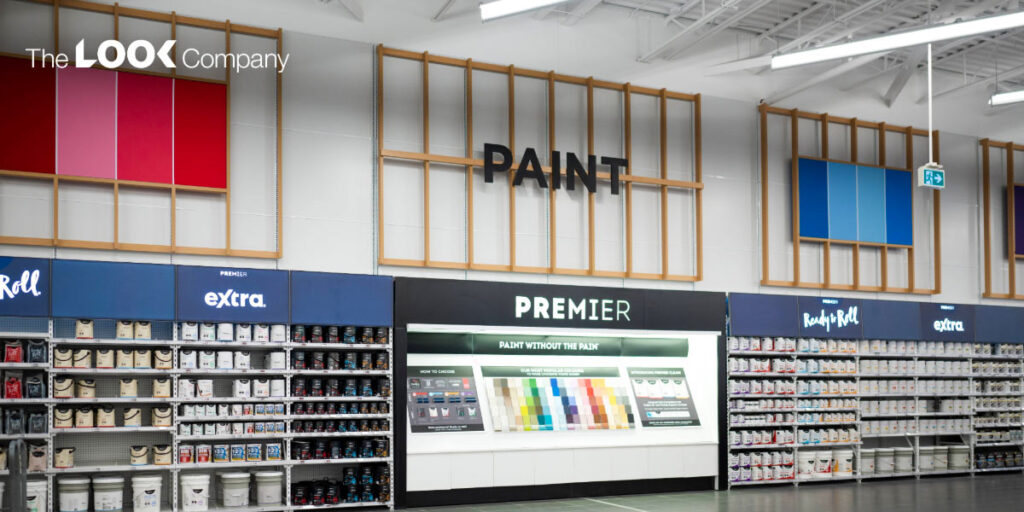
What Is Operationalized Visual Merchandising?
Operationalized visual merchandising is the practice of managing store graphics and in-store displays as a structured operational program—rather than a series of one-off creative executions.
It differs from traditional visual merchandising in one critical way: execution is governed by systems, not just creative direction.
Where traditional approaches rely on individual store teams interpreting brand guidelines, operationalized programs use centralized production, standardized hardware and coordinated retail rollout management to ensure every location executes the same way, every time.
Key characteristics of an operationalized approach include:
- Centralized decision-making for graphics production and scheduling
- Standardized display hardware that works across all store formats
- Documented installation processes with defined accountability
- Performance tracking through retail graphics KPIs
- Scheduled multi-location retail refresh programs tied to business calendars
These are visual merchandising operations—purpose-built for scale.
Why Are Retailers Moving Visual Merchandising Into Operations?
Retailers managing large store networks are moving visual merchandising into operations because ad-hoc execution creates compounding problems at scale.
The challenges that trigger this shift are consistent across major retail brands:
Inconsistent Installations
Without standardized hardware and installation protocols, the same campaign can look entirely different from one store to the next. Brand integrity erodes location by location.
Fragmented Vendor Management
When production, logistics and installation are handled by separate vendors without coordination, timelines slip and accountability gaps appear. Retail signage logistics become a liability rather than an asset.
Delayed Rollout Schedules
Creative-led programs that bypass operational planning often miss launch windows—costing retailers the full commercial value of a campaign.
No Performance Visibility
Without defined retail graphics KPIs, brands have no reliable way to evaluate whether their investment in store graphics is delivering results.
Structured retail rollout management solves these challenges by bringing visual merchandising under the same operational rigor applied to supply chain, inventory and store operations.
What Does an Operational Store Graphics Rollout Look Like?
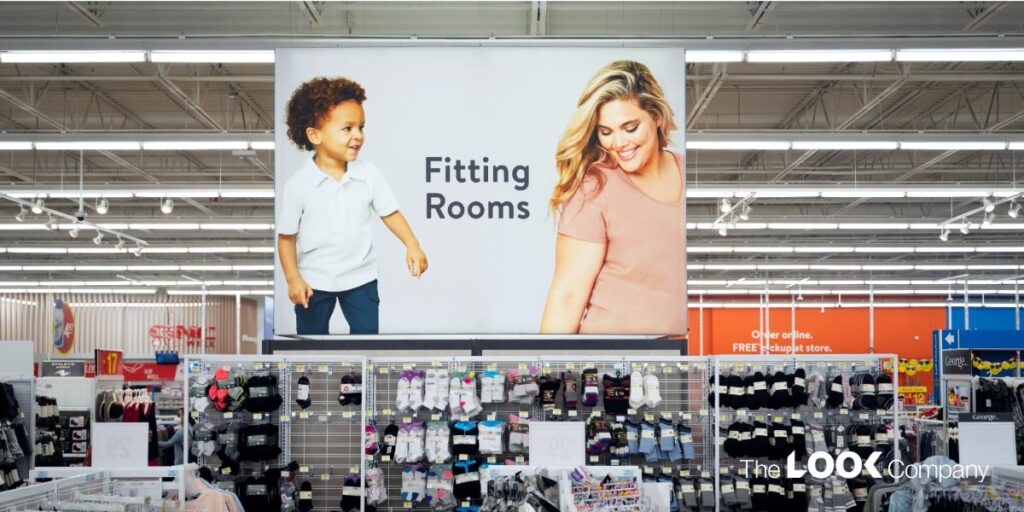
An operational store graphics rollout is a coordinated program built on standardized components—not a one-time project.
Components of an Operationalized Store Graphics Program
A well-structured rollout program typically includes the following components:
- Centralized print production retail: All graphics are produced through a single production source, ensuring color accuracy, material consistency and quality control across every location.
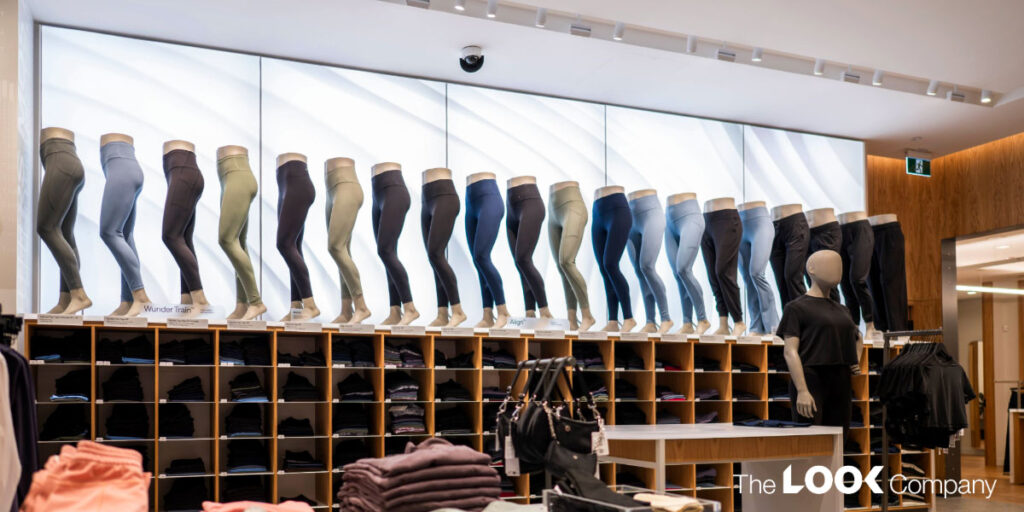
- Modular retail display systems: Reusable frame infrastructure—such as SEG fabric frame systems and integrated lightbox displays—standardizes how graphics are installed and replaced.
- Standardized installation playbooks: A rollout playbook is a documented step-by-step installation guide that tells every install crew exactly what to do, in what order, at every location type. It eliminates guesswork and reduces errors.
- Retail signage logistics coordination: Consolidated shipping, sequenced delivery schedules and site-ready packaging reduce on-site complexity and compress installation timelines.
- Multi-location retail refresh scheduling: Refresh cycles are planned in advance and aligned with promotional calendars, seasonal programs and brand refresh milestones.
- Retail graphics KPIs and reporting: Performance is tracked against defined metrics—rollout completion rates, cost per location, installation accuracy and refresh cycle frequency.
This is the framework that separates retailers who execute consistently from those who don’t.
How Do Modular Systems Enable Scalable Store Graphics Programs?
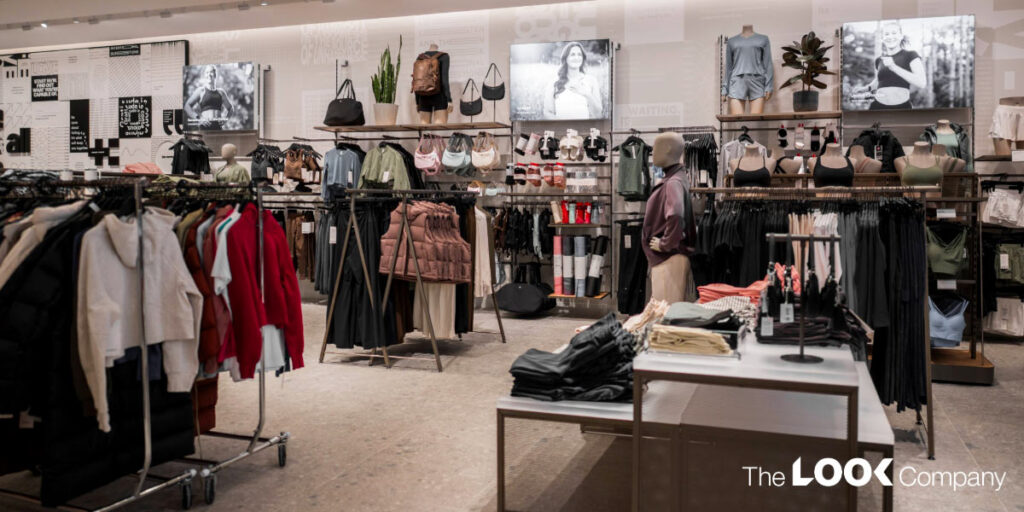
Modular retail display systems enable scalable store graphics programs by replacing custom, single-use installations with reusable infrastructure that works across every store format.
The operational advantage is significant.
Instead of fabricating new display structures for every campaign or refresh, modular systems—such as SEG fabric frame systems and integrated lightbox displays—allow retailers to swap graphics in and out of existing hardware.
This approach delivers measurable operational benefits:
- Faster graphic changeouts: SEG fabric graphics with silicone edge finishing can be replaced quickly without specialized tools, compressing the time required to execute a network-wide refresh.
- Reusable frame structures: Frames stay in place; only the printed graphic changes. This reduces material waste, lowers per-refresh costs and simplifies store graphics installation strategy.
- Adaptable display configurations: Modular systems can be configured to fit different wall dimensions, fixture types and store layouts without requiring custom fabrication for each location.
- Simplified installation SLAs: An installation SLA (Service Level Agreement) defines the expected time and standard for completing an install at each location type. Modular systems make these SLAs achievable and enforceable because the process is the same everywhere.
When retail fabric graphics and frame systems are standardized across a network, every store refresh becomes faster, more consistent and less expensive than the last.
How Do Retailers Measure Visual Merchandising Performance?
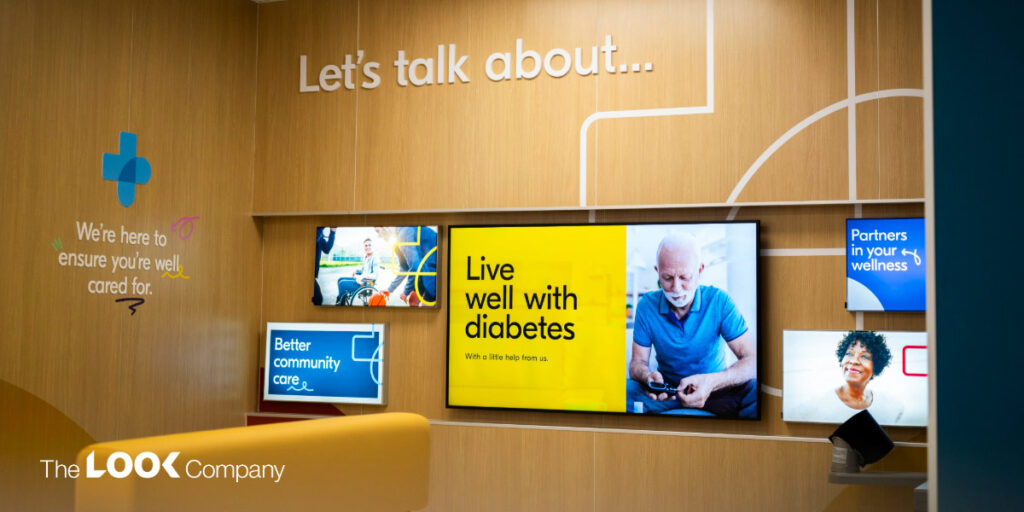
Retailers measure visual merchandising performance through defined retail graphics KPIs—quantifiable metrics that track how effectively a store’s graphics program is executing across the network.
Performance measurement is what separates a true operational program from a creative project.
Without it, there’s no way to identify execution gaps, justify investment or improve rollout efficiency over time.
Key retail graphics KPIs to track:
- Rollout completion timelines: Are installs completing on schedule across all locations? Delays indicate logistics, staffing or coordination gaps.
- Cost per location: Total production, logistics and installation cost divided by number of locations. Modular systems and centralized print production consistently reduce this metric over time.
- Installation accuracy: Are displays installed correctly, in the right position, with undamaged graphics? Accuracy rates reflect the quality of installation playbooks and crew training.
- Refresh cycle frequency: How often are graphics being updated across the network? Higher frequency—enabled by modular systems—keeps stores current and on-brand.
- Brand consistency metrics: Cross-location audits or photo verification programs that confirm visual standards are being met at every store.
Tracking these metrics gives operations and marketing leadership a shared view of program performance—and a clear basis for continuous improvement.
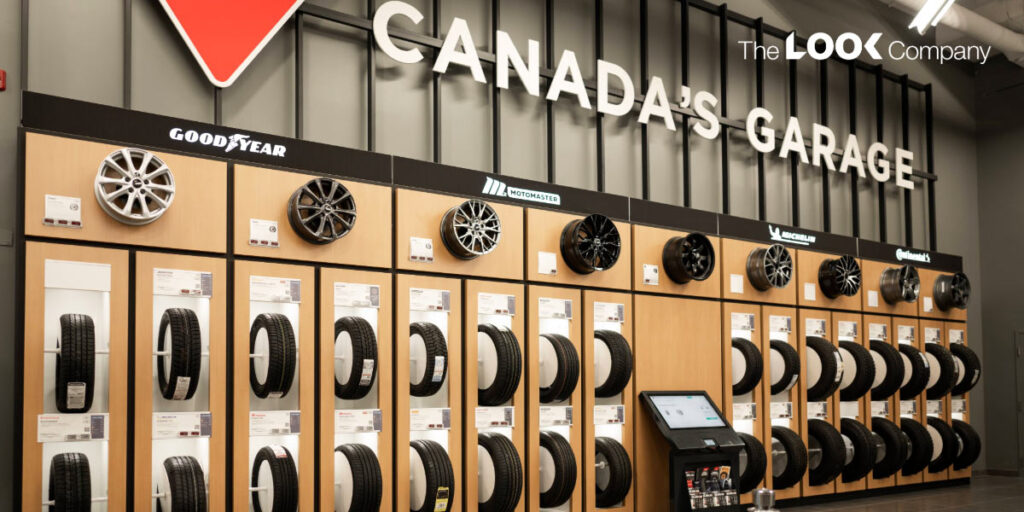
The Look Company: Build a Store Graphics Program That Scales
The shift from creative-led visual merchandising to operationalized visual merchandising isn’t just an efficiency play—it’s a competitive advantage.
Retailers who build the right infrastructure execute faster, maintain tighter brand consistency and get more commercial value from every store refresh.
The Look Company supports large retail brands with the systems that make this possible: modular retail display systems, SEG fabric graphics and frame systems, integrated lightbox displays, centralized print production and coordinated rollout execution across multi-location networks.
Ready to streamline your retail rollout management and operationalize store graphics across every location? Talk to The Look Company today.
Frequently Asked Questions
What Is Operationalized Visual Merchandising?
Operationalized visual merchandising is the practice of managing store graphics as a structured operational program rather than a series of creative projects. It uses centralized production, modular display infrastructure and standardized installation processes to ensure consistent, scalable execution across multi-location retail networks.
Why Are Retailers Centralizing Graphics Production?
Centralized print production gives retailers control over color accuracy, material consistency and quality standards across every location. It eliminates the variability that comes with using multiple regional vendors, reduces per-unit costs through consolidated production runs and simplifies coordination across large multi-location retail refresh programs.
How Do Modular Retail Display Systems Reduce Costs?
Modular retail display systems reduce costs by separating reusable hardware from replaceable graphics. Frame structures remain in place across multiple refresh cycles—retailers only pay to produce and install new graphics, not new display structures. This lowers cost per refresh and reduces material waste over time.
What Role Does Operations Play in Store Graphics Programs?
Operations manages the logistics, scheduling, vendor coordination and performance tracking that make large-scale store graphics programs executable. Without operational oversight, visual merchandising programs are vulnerable to inconsistent installation, delayed rollouts and fragmented vendor accountability across the retail network.
How Often Should Retail Graphics Programs Refresh?
Refresh frequency depends on the brand’s promotional calendar, seasonal strategy and campaign lifecycle. Retailers using modular systems and centralized production can refresh more frequently—often quarterly or campaign-by-campaign—because changeout times and per-location costs are significantly lower than with traditional custom installations.
What Is a Rollout Playbook?
A rollout playbook is a standardized installation guide that documents exactly how store graphics should be installed at each location type. It covers sequencing, hardware specifications, positioning requirements and quality checkpoints. Playbooks reduce installation errors, shorten crew training time and make installation SLAs enforceable across the full store network.